Identifying a Universal Mechanism for Eukaryotic Transcription Regulation
Aliya Ather, University of Mary Washington, Physics and Chemistry Major
Mentored by Dr. Jeremy Schmit
Protein synthesis is an essential process that dictates much of cellular function. In eukaryotes, this process is undergone by transcribing messenger RNA from a DNA strand using the enzyme RNA Polymerase II and translating these nucleotides into amino acids, which then fold into a protein. Understanding how the process of transcription is regulated across many genes and therefore protein production is essential to increasing our understanding in diseases where this process goes wrong such as in neurodegenerative diseases like Alzheimer’s.
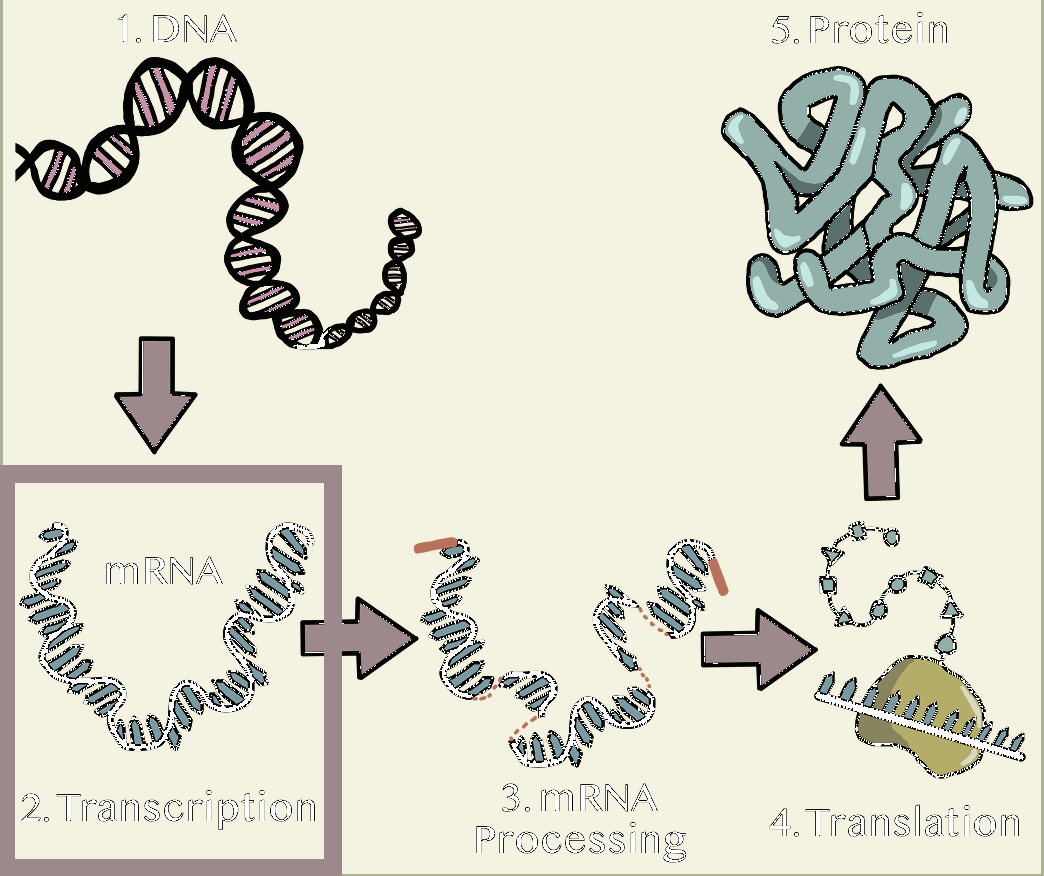
Fig. 1. Simplified depiction of protein synthesis where transcription takes place.
Current models describing transcription regulation rely on exploring the kinetics of DNA binding to transcription factors, which are proteins that help facilitate transcription. One is the activator model, in which once the necessary transcription factors are bound to the targeted gene, RNA Polymerase II may then bind to the gene and initiate transcription. The repressor model states that there are transcription factors that bind to the gene and prevent RNA Pol from binding until they are removed. In reality, eukaryotic transcription is more complicated and involves a variety of different transcription factors all working together. However, we wanted to see which model best fit current experimental data.
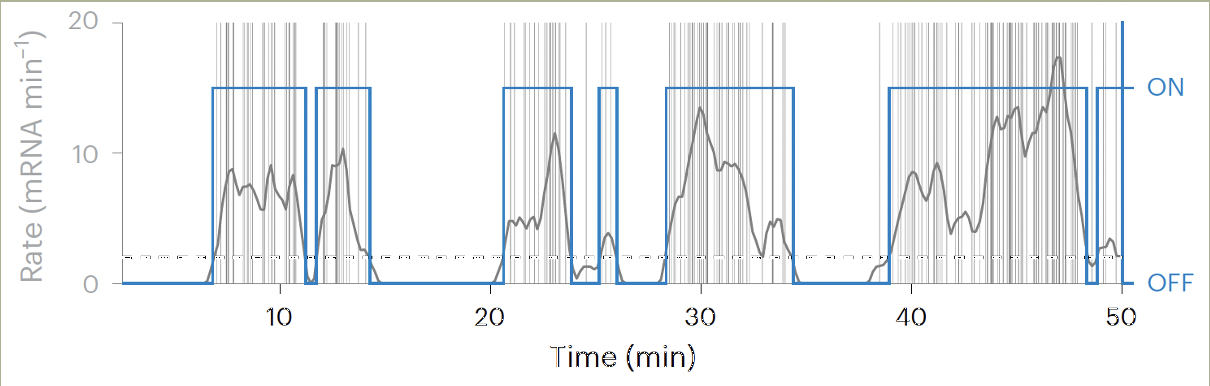
Fig. 2. Transcription Rate (mRNA/min) vs. Time (min). This figure depicts the bursting behavior observed in transcription within Drosophila embryos where the transcription rate increases for a length of time before suddenly dropping below a select threshold. Source: https://doi.org/10.1038/s41594-025-01615-4.
We looked at data comparing five Drosophila embryo genes implicated in gap segmentation of the Drosophila along with Drosophila embryo mutants where transcription factors including both activators and repressors were removed. The initiation events of RNA Pol beginning transcription were measured over time to obtain the transcription rates. This revealed an interesting phenomenon where transcription rates appeared to surpass a certain threshold for a certain amount of time, before the rate dramatically dropped, and then picked up again.
To investigate whether this bursting behavior appears to have control over transcription, the parameters Ton, the average period of time transcription is on in minutes, and Toff, the average period of time transcription is off in minutes, were generated from the data. This then provided Pon, the probability of transcription being on or the average Ton over total time.
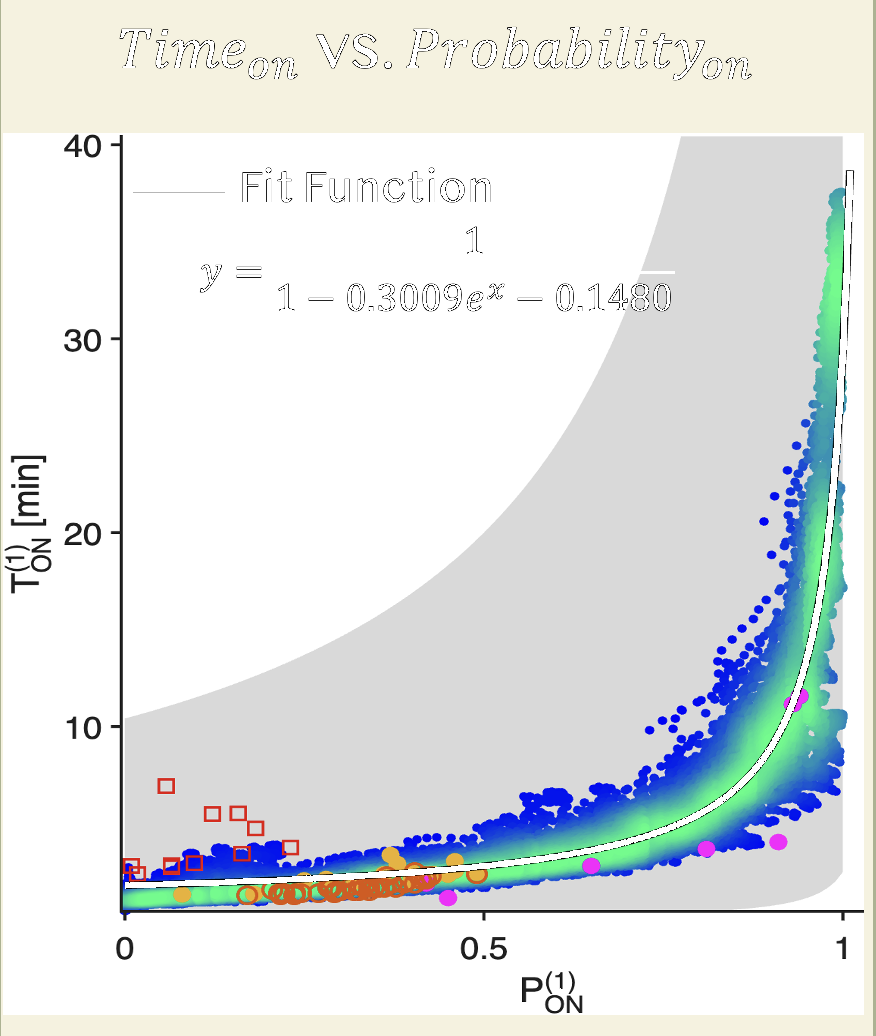
Fig. 3. Time On vs. Probability On. This depicts the data collapse of the different genes into the same functional relationships, including a linear and an exponential region. Source of the data: https://doi.org/10.1038/s41594-025-01615-4.
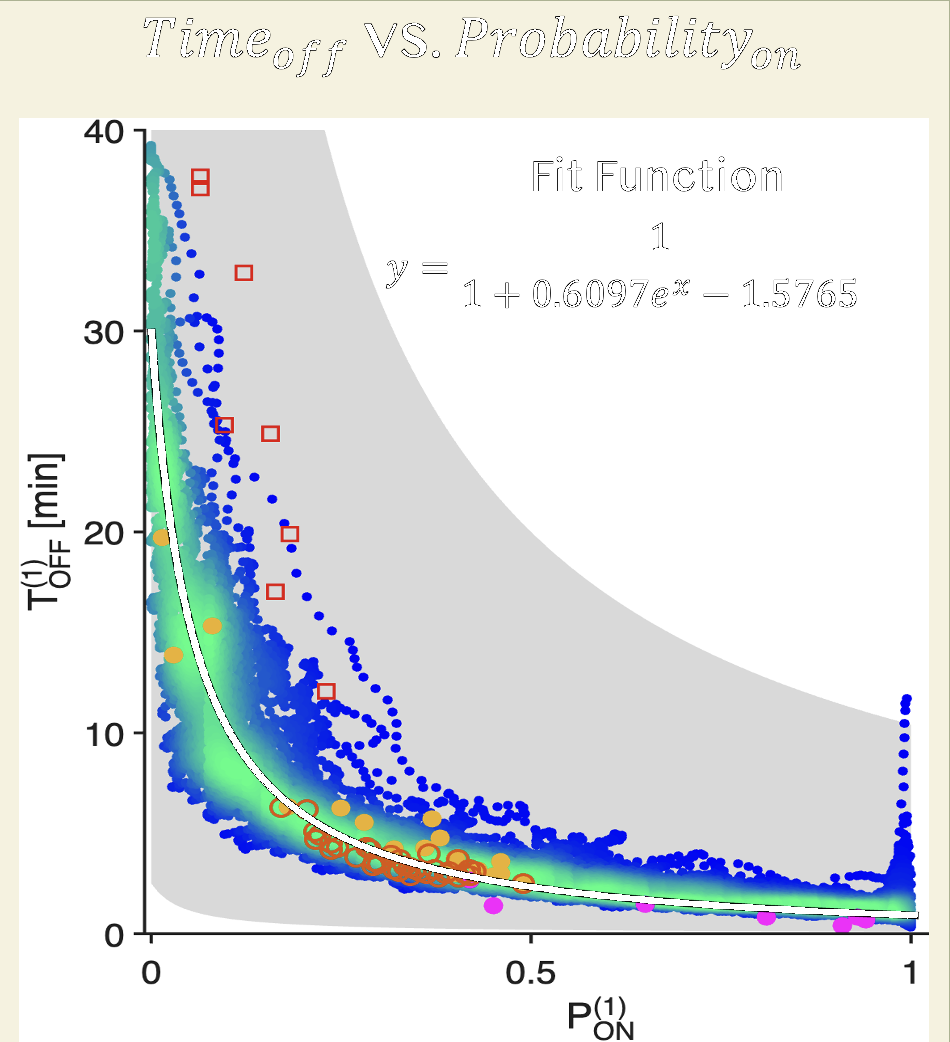
Fig. 4. Time Off vs. Probability On. This also depicts the data collapse of the different genes into the same functional relationships. The similarity of this to Figure 3 indicates Ton and Toff are interconnected.
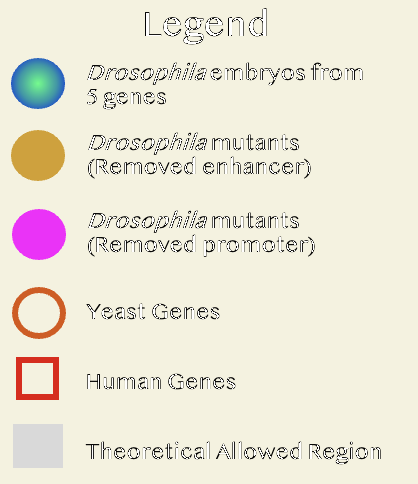
Fig. 5. Legend for Figure 3 and 4.
These parameters were then used to conduct data collapse analysis, a technique commonly employed in statistical mechanics where many different datasets can follow the same functional relationships upon graphing. Ton vs. Pon and Toff vs. Pon graphs were generated, where it was observed that all the Drosophila genes, the GAL10 gene found in yeast, and eleven human genes collapsed into the same function with both a linear and exponential region. This indicates not only that the length of a burst determines whether or not transcription is on and not the concentration of transcription factors based on the activator and repressor models, but that all genes, regardless of species, location within a single species, or mutation, demonstrate the same behavior. The similarity in functional relationships when Ton and Toff are graphed with Pon also indicate that there is a single unified mechanism governing bursting.
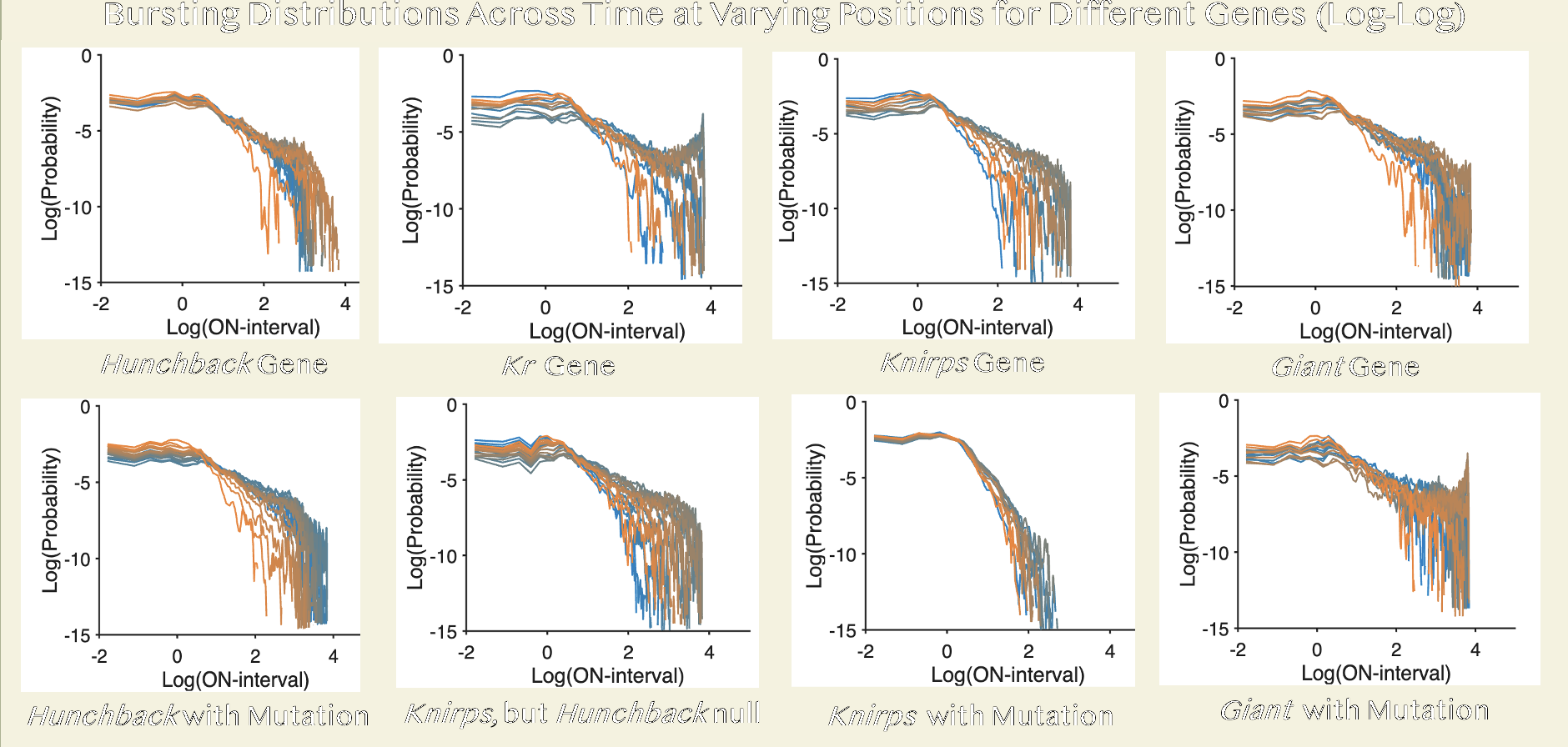
Fig. 6. Distributions of Bursts Across Time at Varying Positions within the embryos for Different Genes (Log-Log)
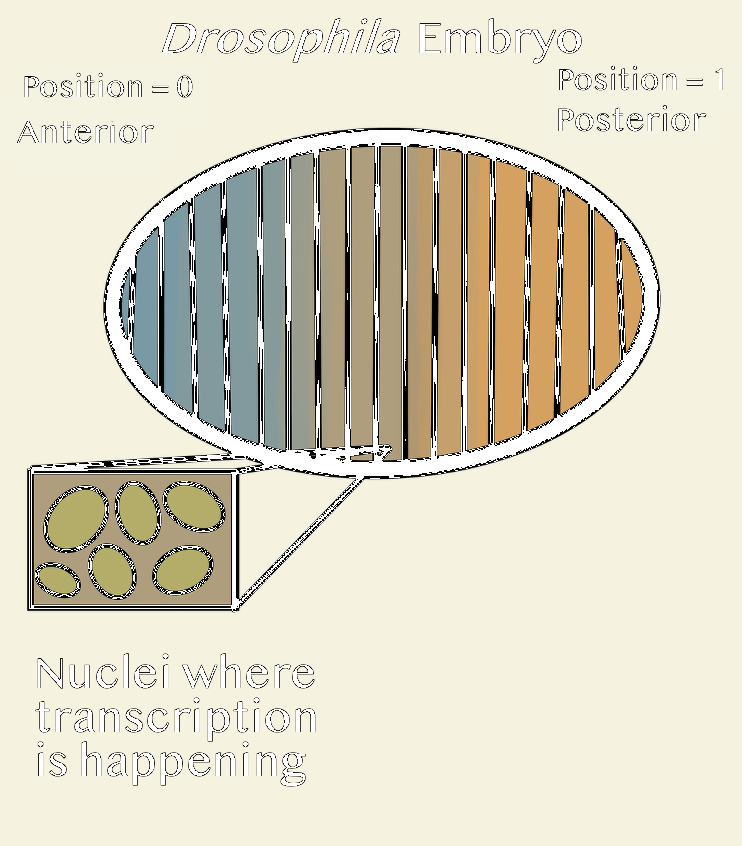
Fig. 7. Legend for Figure 6 designating each line within an individual graph to be a different spacial position within the embryo where the gene is located.
To confirm this observation, the individual Drosophila gene bursting behavior was analyzed in search for any similar relationships across different genes by graphing the probability of bursts that last a certain length over a time interval. Each gene measured for bursts at different spacial locations within the embryos as well. It was found that across all these different genes, they all appear to have similar amounts of bursting at the same time-scale. This analysis also indicates that the current transcription factor-dependent models for transcription regulation are not quite accurate as they indicate that the burst length should be different given that these genes would inevitably vary in transcription factor type and concentration. In the future, we would like to continue investigating and identifying possible mechanisms that could be causing this universal bursting behavior at a scale beyond individual molecules.
Acknowledgments
I would like to thank the faculty at Kansas State University, including Dr. Jeremy Schmit for advising and providing guidance on this project. Thanks also to Dr. Buddho Chakrabarti and Larry McFeeters for assistance regarding MATLAB. I would also like to thank Dr. Thomas Gregor, his group at Princeton University, and Dr. Benjamin Zoller for providing the experimental data and guidance. Additionally, many thanks to Kim Coy, Dr. Bret Flanders, and Dr. Cosmin Blaga for hosting this REU program and providing this opportunity. This material is based upon work supported by the National Science Foundation under Grant No. 2548403. Any opinions, findings, and conclusions or recommendations expressed in this material are those of the author and do not necessarily reflect the views of the National Science Foundation.